


 By guest - July 28, 2026
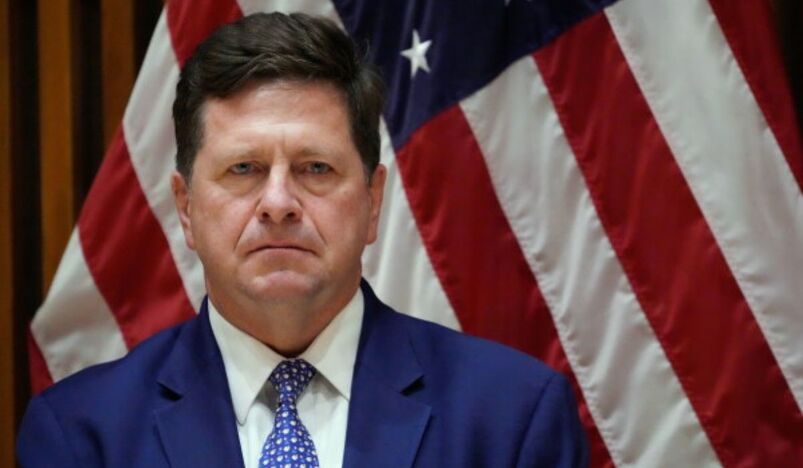
Jay Clayton, a former Wall Street lawyer who chaired the Securities and Exchange Commission during President Donald Trump’s first term and now serves as the U.S. Attorney for the Southern District of New York, is Trump’s nominee to become Director of National Intelligence. After a party-line committee vote and a 51-43 procedural vote in the Senate, he is expected to be confirmed within days, with a final vote possible as soon as this week.
At a glance
|
Name |
Jay Clayton |
|
Nominated for |
Director of National Intelligence (DNI) |
|
Nominated by |
President Donald Trump (June 2026) |
|
Current role |
U.S. Attorney, Southern District of New York |
|
Notable past role |
Chair, U.S. Securities and Exchange Commission (2017–2020) |
|
Status |
Cleared cloture 51–43; awaiting final Senate confirmation vote |
|
Would replace |
Bill Pulte, acting DNI |
From Wall Street regulator to Manhattan prosecutor
Clayton is a veteran of the Trump administration. He led the SEC from 2017 to 2020, overseeing the country’s top markets regulator, before being tapped in the current term to run the Southern District of New York widely regarded as the most prominent of the Justice Department’s prosecution offices, handling major cases in fraud, corruption and terrorism. Supporters point to that combination of private-sector and law-enforcement experience as preparation for leading the intelligence community; some critics note he arrives without a traditional national security or intelligence background.
How the nomination came about
The path to Clayton’s nomination was unusually turbulent. The DNI post opened when Tulsi Gabbard resigned, and Trump installed Bill Pulte head of the Federal Housing Finance Agency, who had drawn scrutiny for referring several of the president’s political opponents for investigation as acting director. Pulte’s lack of an intelligence background drew bipartisan concern. Trump nominated Clayton in June as a more permanent choice, then briefly paused the process in a way that allowed Pulte to serve on an interim basis, before the nomination moved forward. The standoff also entangled Section 702 of the Foreign Intelligence Surveillance Act, a warrantless surveillance authority that Democrats declined to renew while Pulte remained in the role.
A contentious confirmation
At his July 15 confirmation hearing before the Senate Intelligence Committee, Clayton faced pointed questioning. He repeatedly declined to state outright that Joe Biden won the 2020 election, saying instead that Biden “was certified” and asserting that he is not an election denier. Democrats also pressed him on his decision, as a prosecutor, to subpoena New York Times journalists over their reporting. The committee advanced his nomination 9-8 along party lines, and the full Senate later cleared a 51-43 procedural vote.
The reaction has split sharply along partisan lines. Committee Chairman Tom Cotton called Clayton a highly qualified nominee with deep experience in confronting national security threats, and Senate Majority Leader John Thune argued that installing a proven leader is especially important amid a heightened threat environment. The panel’s top Democrat, Mark Warner, said he was “bitterly disappointed” by Clayton’s hearing performance and would not vote to confirm him, though he acknowledged Clayton would likely be approved. Senator Jon Ossoff sharply challenged the nominee over his refusal to answer directly on the 2020 result.
What the DNI does
The Director of National Intelligence leads the Office of the Director of National Intelligence, a post created after the September 11 attacks to coordinate the work of the nation’s 18 intelligence agencies. The role carries access to the country’s most sensitive secrets and broad authority over how intelligence is gathered, analyzed and shared across the government.
What’s next
With Republicans holding a 53-47 Senate majority, Clayton is expected to be confirmed despite Democratic opposition, potentially within days. His confirmation would remove Pulte from the acting role and, in the view of several senators, help clear the way for the Senate to renew the lapsed Section 702 surveillance authority. This is a developing story, and the timing and outcome of the final vote may change.

.jpg)


_20-08-2026_05-08.jpg)
_27-51-2026_11-51.png)
_27-43-2026_12-43.png)

_03-27-2026_08-27.jpg)


.jpg)
.jpg)




.jpg)


.jpg)
.png)
.jpg)













Leave a comment